Hilandar Monastery
If you have even a little curiosity about Mount Athos, Hilandar is one of those monasteries that stays with you. Here in Ouranoupoli we see pilgrims leaving every day with emotion, because they know they will encounter something authentic and deeply historical.
It’s not a place you “do” like a simple day trip. It requires planning, respect and a little time to let the landscape and the hush settle in slowly, otherwise you’ll miss it.
The Serbian “Diamond” of Mount Athos
The Serbian “Diamond” of Mount Athos
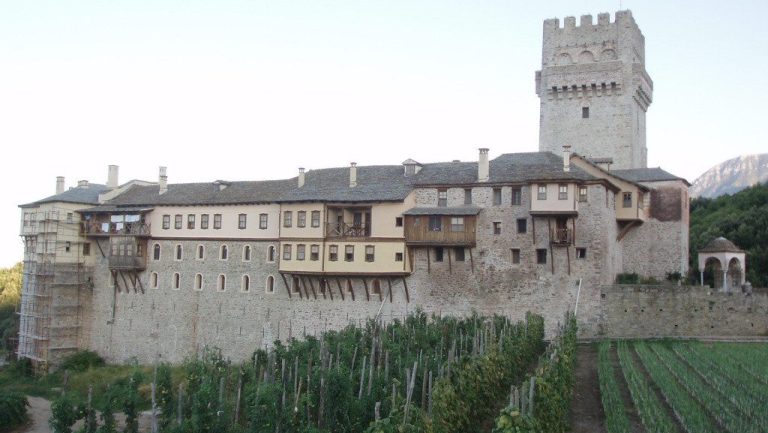
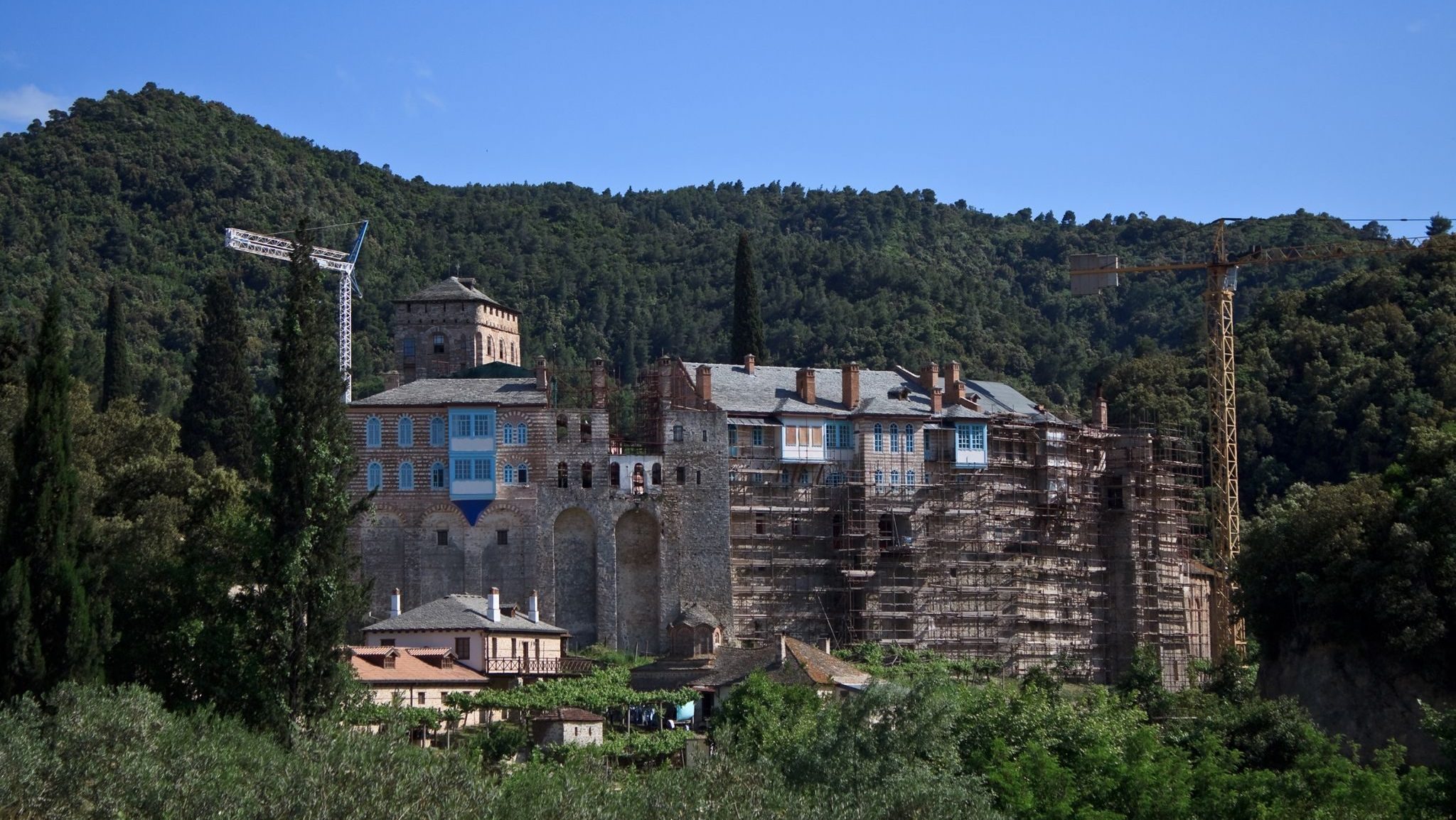
Hilandar Monastery holds fourth place in the hierarchy of Athonite monasteries and serves as the enduring spiritual center of the Serbian people. Built in a wooded valley on the northeastern side of the peninsula, the monastery charms visitors with its imposing fortress-like architecture and its priceless treasures.
Where it is and what to expect from the landscape
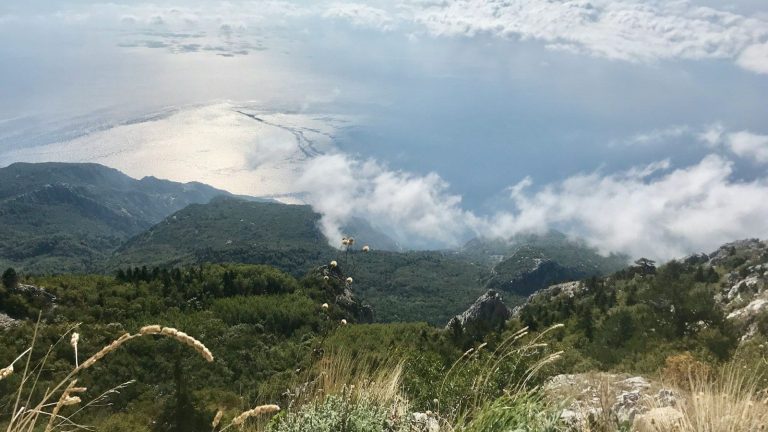
Hilandar is located on the eastern side of the Athos peninsula, in a green valley of chestnut and cypress trees, away from the “easy” roads. That’s why, as you approach it, it seems to emerge like a castle from the forest. The feeling is more enclosed and protected compared to monasteries that face openly to the sea.
If you want a concise overview of the status and history of the monastic state, the official gateway is Agioritiki Estia (very useful for basic information and cultural context). For a purely geographic picture and historical references about the monastery, the Wikipedia entry for Hilandar Monastery is also helpful.
History and founding
History & Founding
Although its roots go back to the 10th century, the monastery as we know it was founded in 1198. Emperor Alexios III Angelos granted the then-ruined monastery to the Serbian rulers Stefan Nemanja and his son Rastko.
The two rulers renounced worldly life, took the monastic names Simeon and Sava, and became the monastery’s founders and saints. Since then, Hilandar has been an “eternal beacon” for Serbian religious and cultural identity. You don’t just read about it — you feel it in the people who come from Serbia and in those who have read about Mount Athos and want to see a piece of living history up close.
Architecture and surroundings
Architecture & Surroundings
The monastery has the appearance of a medieval castle with walls reaching up to 30 meters high, built to protect the interior from past pirate raids. When visitors first arrive they often stand for a while in the courtyard and look around, as if trying to “read” the building. It’s austere, but not cold. There’s a warmth to it, especially when the sun sits low.
- The Katholikon: Built around 1300 by King Milutin, it is dedicated to the Presentation of the Theotokos. It stands out for its rich exterior decoration and magnificent frescoes.
- The Tower of Saint Sava: Dominates the courtyard and is one of the oldest and most imposing structures.
- The Phiale: An artistic construction in the courtyard used for the blessing of waters.
If you’re one of those who notices details, look at the stones, the joints, the old timbers, the marks of time. It’s not a “set.” It’s real, and it shows.
Holy exhibits and relics
Holy Exhibits & Relics
Hilandar is one of Mount Athos’s great treasuries. You don’t need to be a specialist to feel the weight of the relics. Just watch how pilgrims stand, how they lower their voices, how they wait their turn patiently. Sometimes, inside, time does something strange and just stops for a bit.
Among the notable items:
Panagia Tricherousa: The monastery’s most famous icon, closely linked to Saint John of Damascus.
Panagia Galaktotrophousa: A rare and beautiful icon of the Theotokos.
The Vine of Saint Simeon: According to tradition, the vine that grew on Saint Simeon’s tomb miraculously helps childless couples.
Holy Relics: The monastery preserves fragments of the Crown of Thorns, the Shroud of Christ, and the right foot of Saint Panteleimon.
One practical point: in places like these we don’t rush or push. If there are people present, let the monks guide the flow. The experience is much better that way, and it shows the respect that’s due.
Important feast days and what changes then
Important Feast Days
The monastery celebrates with special solemnity:
November 21 (December 4 on the old calendar): The Presentation of the Theotokos (the main feast).
February 13 (February 26): Commemoration of Saint Simeon the Myrrh-streamer.
January 14 (January 27): Commemoration of Saint Sava, the first Archbishop of Serbia.
What does this mean in practice? More people, a fuller atmosphere, and often a greater need to contact in advance for hospitality. If you plan to go around a major feast, make phone calls early. Don’t leave it to the last minute — you’ll end up rushing and no one’s to blame.
How to get there from Ouranoupoli and what to watch for
Ouranoupoli is the classic gateway to Mount Athos, on the third leg of Halkidiki, along the Athonite coast. From Thessaloniki, by car you usually need around two hours, depending on traffic and stops. In summer, especially, keep in mind that the last kilometers can be busy and parking fills up quickly.
For an official overview of the Central Macedonia region and general travel information, take a look at Visit Greece. For weather, especially if you’re traveling by boat and care about the wind, the Hellenic National Meteorological Service (HNMS) is the most reliable source to check before you leave.
The diamonitirion and basic procedure
To enter Mount Athos you need a diamonitirion. This isn’t just a “formal piece of paper” — it’s essentially your entry permit and you must have it on you. Procedures can change, so always confirm with official sources and with the Pilgrim Office before organizing your day.
Transfer to Hilandar Monastery
The approach to the monastery is mainly from the arsana (harbor). From Ouranoupoli you take the boat to Dafni and, depending on the route and stops, you disembark at the monastery’s jetty. There is also a speedboat option from Ierissos that serves the eastern side. From the arsana, there is usually a monastery bus that takes pilgrims up to the main complex.
Here’s what we always tell our guests: don’t pin your day to one promised time. Sea, winds, and stops all play their part. Leave some buffer time and a little patience — it pays off.
Seasons, weather and the feel of the trip
Spring and early summer are lovely — green, clear air, and the sea is usually calm in the early morning. July and August bring more heat and more people in Ouranoupoli, so those months require better advance planning. Autumn has a sweet quiet, but northerly winds can make the boat ride livelier.
In winter, although the landscape is very particular, conditions change often. If you’re considering a winter visit, check the weather very close to departure and bring clothing for dampness and wind. On Mount Athos you feel the cold differently, especially in the shaded forest areas.
Who it suits
Hilandar suits people who love history, Orthodox tradition and architecture. It’s also for those who want to experience the silence of Athos, not just to see a building and leave. It’s absolutely possible for older visitors, provided they can manage stone floors and steps comfortably. For groups, it’s nice — but only if there’s a shared disposition. If someone treats it like a typical sight, they’ll struggle to enjoy it.
For families, let’s be clear: access to Mount Athos has restrictions, so plan your trip according to the rules in force. If you travel as a couple and one person cannot enter, Ouranoupoli and the surrounding area offer pleasant options for walks, beaches and views toward Athos, so the day isn’t “lost.”
How to visit from Athos Guest House – Pansion
How to visit from Athos Guest House – Pansion
Athos Guest House – Pansion in Ouranoupoli is an ideal starting point for your pilgrimage.
1) Stay in Ouranoupoli the night before
Accommodation: Start your trip rested by spending the night at our guesthouse. We are just 30 meters from the beach and very close to the Pilgrim Office. Practically, this means you won’t be stressed in the morning with transfers, parking and last-minute worries. You arrive, leave your things, sleep early, and wake up clear-headed.
Contact us for 2026 offers and family/group discounts.
2) Collect the diamonitirion
Diamonitirion: On the morning of departure, pick up your diamonitirion from the Ouranoupoli office (opens at 07:30). It’s a good idea to be there early, especially in peak periods. A small bottle of water and a bit of patience work wonders.
3) Transfer to the monastery
Transfer: Hilandar is mainly accessible from the arsana (harbor).
You can take the boat from Ouranoupoli to Dafni and disembark at the monastery’s jetty, or use the speedboat from Ierissos (which serves the eastern side). From the arsana, a monastery bus usually transfers pilgrims to the main complex.
Small practical tips from someone who lives it every day
Without making it “military,” a few things help a lot. Bring a light jacket even if it’s hot in Ouranoupoli. The sea can get windy, and inside the forest the humidity drops. Also, wear comfortable shoes — not necessarily hiking boots, but shoes suitable for stone, steps and courtyards.
Regarding behavior, keep your voice low and put your phone aside. It’s not a “rule” so much as a way to enter the mood. And remember that hospitality runs at monastic pace. If you go with a willingness to adapt, you’ll have a much better time.
Tip: Due to high demand, we recommend contacting the Monastery for lodging arrangements several months before your visit (Monastery hospitality office Tel: +30 23770 23797)
Contact us to arrange your stay in Ouranoupoli
Contact us
to see the availability or offers for your stay.
send us an email to info@pansionathos.gr
call us: +306957638384 or +302377071337
call us or send a message via WhatsApp
send an SMS text message
call us or text us on Viber
Don’t forget to mention:
- Number of Persons, Possible Dates, Requirements
Useful Telephone Numbers
- Athos Guest House – Pansion: +3023770 71337 – +306983522806
- Pilgrim Office of Ouranoupoli: +3023770 71421
- Aghioritic Lines (Ships): +3023770 71149
- Hilandar Monastery: +3023770 23797 (Fax: +3023770 23494)