Simonopetra Monastery (Simonopetra)
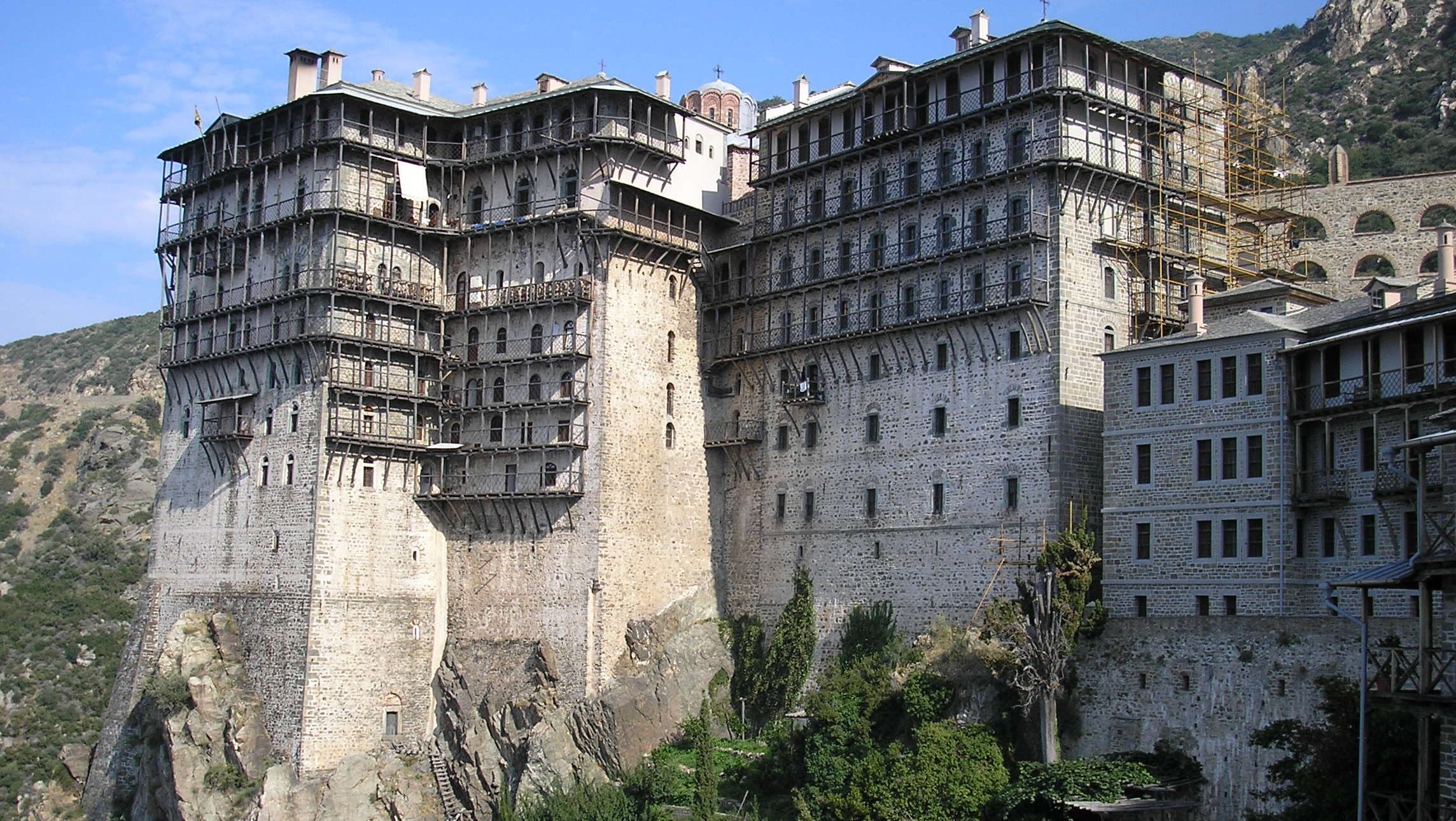
Anyone who has seen Simonopetra from the sea immediately understands why we call it Athos’s “hanging” monastery. It seems to hang above the Aegean and silences you, even if you’ve visited many monasteries before.
As a hotelier in Ouranoupoli, I’ve helped countless pilgrims organize their first trip to Mount Athos. Almost all of them, when they return, first talk about that moment they see the seven-story building perched on the rock. It’s an experience that stays with you.
The architectural wonder of Athos, perched on the rock
The Holy Monastery of Simonopetra sits on the southwest side of Mount Athos, above the sea, built on a steep granite rock about 230 meters high. From Ouranoupoli the trip always begins by boat to Dafni, and from there you continue depending on the schedule and how you’ve arranged your stay.
What impresses here isn’t just the location. It’s also how the building ‘‘stands’’ over the void. The monastery developed vertically because the space on the top of the rock is limited. So you’re looking at a seven-story complex with wooden verandas that seem to float. When the wind comes from the sea, especially on northerly days, you hear it pass through the openings and you feel the height more strongly. A little dizziness at first, then awe takes over.
Historical background that explains a lot
The monastery was founded in the mid-14th century by Saint Simon the Myrrh-gusher. Tradition says that on Christmas night he had a vision in which the Theotokos indicated that he should build the monastery on this particular rock, promising protection. Stories like this on Athos aren’t told just for effect. You feel them tied to the landscape, the isolation, and the way the fathers live.
Simonopetra has been tested by fires, the most destructive occurring in 1891. Yet it was rebuilt. Historically, significant help came from donations, including from Russian tsars and rulers of Moldavia and Wallachia. From the 1970s onward, the monastery experienced a spiritual renewal, with a refreshed brotherhood and more systematic care of the buildings and hospitality.
Architecture: a true “multi-story” monastery
If you love architecture, you could spend a long time here. Each level has its role, and because everything is ‘‘crammed’’ onto the rock, the corridors, stairways, and passages are all part of the experience. It’s not a museum. It’s a living monastery, with its own rhythm, rules, and order.
The wooden verandas are the trademark. Balconies facing the Aegean with views that change by the hour. In the morning the light is clear and sharp. In the late afternoon it softens and the sea turns deep blue. On humid days, especially in spring, you can see a thin mist that hangs low. It looks as if the monastery is floating.
Holy relics and a pilgrimage that moves you
The monastery’s best-known relic is the left hand of Saint Mary Magdalene. Pilgrims often describe the sense of temperature and a special fragrance. Whatever each person believes, the moment is powerful. It helps to come with respect, silence, and without rush. Don’t treat it like a checklist; it would be a shame.
The monastery also keeps other important relics, such as a piece of the Holy Cross, relics of Saint Dionysius the Areopagite, and the miraculous icon of the Virgin of Hope. Some items are shown depending on the day and the brotherhood’s schedule, so it’s best to follow the fathers’ instructions and not insist on ‘‘seeing everything.’
- Allow time for the catholicon and the quiet of the spaces, not just the relics.
- Ask politely if photography is allowed. Usually it isn’t, and it’s right to respect that.
- If you have hiking afterward, conserve your energy. Uphills on Mount Athos are no joke.
The library and its “silent” treasures
Although part of the material was lost in the fires, Simonopetra’s modern library is exemplary in its organization. It includes thousands of printed books, handwritten codices, and important Byzantine and post-Byzantine documents. For those interested in history, theology, or paleography, it’s reason enough to feel the ‘‘weight’’ of the place’s continuity.
Don’t expect a visit like a university reading room. It’s a monastic space with rules and restrictions. If you have a specific interest, it’s better to mention it in advance when organizing the visit. Sometimes the fathers can help, and other times it’s not possible due to workload or the season.
Calendar and dates: why the dates “don’t match”
The Monastery follows the Julian Calendar (Old). That means the major feasts fall on different days compared to the civil calendar we’re used to. If you plan to attend a feast, don’t rely on what friends tell you. Confirm with official sources, because the schedule and hospitality options can change.
The main celebrations are Christmas (25 December, corresponding to January 7 in the new), Saint Mary Magdalene (July 22, i.e. August 4 in the new), and Saint Simon (December 28, i.e. January 10 in the new). On such days there’s increased activity, limited accommodation, and a more demanding program. It’s worth it, but it requires good preparation.
Where it is and how to get there correctly
The starting point for most people is Ouranoupoli, on the third leg of Halkidiki, at the Athos Coast. From here documents are checked and boarding for Mount Athos takes place. By car, from Thessaloniki plan about two and a half hours, depending on traffic and stops. Parking in Ouranoupoli fills up quickly in summer, especially if you arrive late at night. It’s better to be here early.
For entry procedures (diamonitirio, rules, permitted number of visitors), always check official announcements. A useful starting point for a general picture is the corresponding Wikipedia page, but for practical matters you need official confirmation: https://en.wikipedia.org/wiki/Monastery_of_Simonopetra and for the context of the place: https://en.wikipedia.org/wiki/Mount_Athos. For weather and winds, especially if you travel by boat, I recommend checking the official meteo: https://meteo.gr/. It can save you trouble, as the weather at sea changes quickly.
What to expect by season
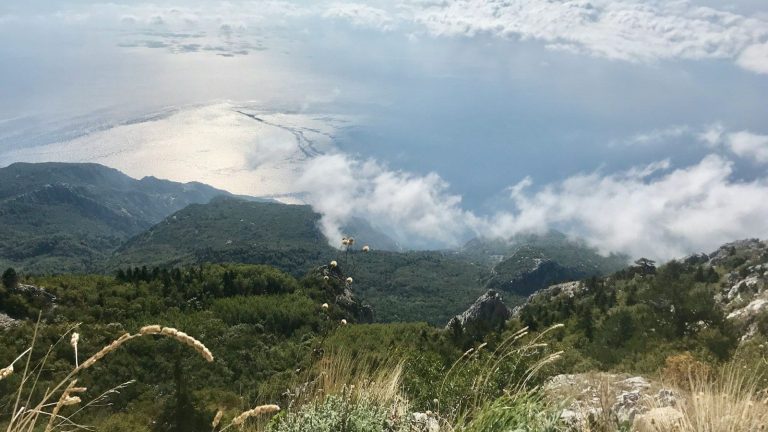
In spring the landscape is at its best. Green, clear air, and walking routes are more bearable. The sea water is still cold, but visibility is often incredible. In summer there are more people and more heat. Uphills become hard after 11 a.m., and shade isn’t always available.
Autumn, I personally consider ideal. Less crowding, milder temperatures, and that soft light that makes Simonopetra look even more ‘‘suspended.’’ In winter things are tougher. More wind, more humidity, and movements can be affected. If you’re thinking of winter, be ready for last-minute changes to the schedule, okay?
Who it really suits
Simonopetra suits pilgrims who want an intense experience, not a simple visit. People who value order, silence, and discipline. Also those who love the landscape and aren’t afraid of heights. If you have acrophobia, be aware that the balconies and the sense of the void are very strong. It’s not dangerous, but intense.
For older visitors it’s possible, provided the pace is right and movements aren’t forced. For groups, it’s good to agree on the rules in advance. On Athos you don’t pull each other along. Go with calm and respect.
Planning your visit and accommodation: what works in practice
Simonopetra is one of the most popular monasteries. If you want to request overnight stays, you need to contact them well in advance. Places are limited and needs are many. Here in Ouranoupoli, the most practical approach is to arrive the day before, sleep quietly, be next to the port and the Pilgrim Office, and depart in the morning without stress.
For this ‘‘base,’’ Athos Guest House – Pansion is the most convenient. We’re next to the port and literally next to the procedures you need to complete. That means less running around, less stress, and a better start.
Contact us for 2026 offers and family/group discounts.
In practice, most pilgrims need two things. To be told exactly where to go, in what order, and what to watch out for with papers and luggage. And to start well-rested. A bad night before the boat ruins the whole day — I see it all the time.
Useful phone numbers so you don’t search at the last minute
Monastery of Simonopetra: +30 23770 23254
Pilgrim Office: +30 23770 71421
Athos Guest House: +30 23770 71337, +306957638384
Ouranoupoli Port Authority: +30 23770 71248
Keep them written down and on your phone. At the port, especially when it’s crowded, everyone is looking for something. A simple call saves time.
Suggested 4–5 day pilgrimage route
If it’s your first time, this plan works well without exhausting you. It requires flexibility, because on Mount Athos movements depend on weather, hospitality, and local conditions. Always keep in mind that something may change at the last minute, and don’t let it get you down.
- Day 1: Arrival in Ouranoupoli, settle at Athos Guest House – Pansion, stroll to the Tower of Prosforio.
- Day 2: Morning boat to Simonopetra. Pilgrimage and overnight stay (by arrangement).
- Day 3: Hike to Grigoriou Monastery and Dionysiou Monastery (coastal route).
- Day 4: Transfer to Dafni and from there to Karyes (Protaton, Panagia Axion Esti).
- Day 5: Return to Ouranoupoli and stay at Athos Guest House – Pansion to recover before your trip home.
Small practical tips that make a big difference
Take a light bag. Comfortable shoes, not new ones, because they’ll rub. A thin windbreaker, even in summer, because it’s windy on the boat and at high points. And water, but in moderation. You don’t want to carry unnecessary weight.
If you plan to walk between monasteries, start early. At noon, especially in July and August, the heat gets heavy and shade is scarce. And if you see that it’s not working out, don’t force it. Better to arrive late and calm than exhausted and irritated.
Peace begins in Ouranoupoli
The Athos experience starts before you step on the boat. It starts with how you sleep, how you organize your documents, and how you get into the mood. If you want, you can stay with us at Athos Guest House – Pansion and depart in the morning without rushing. We’ve been here for years and know the small details that usually aren’t written anywhere.
Contact us for 2026 offers and family/group discounts.
Contact us
to see the availability or offers for your stay.
send us an email to info@pansionathos.gr
call us: +306957638384 or +302377071337
call us or send a message via WhatsApp
send an SMS text message
call us or text us on Viber
Don’t forget to mention:
- Number of Persons, Possible Dates, Requirements
For immediate contact and reservations you can also use the form here: https://ouranoupolishotel.com/en/contact-us-en/. It’s better to arrange things early, especially during busy periods, so you can be at ease.