Holy Monastery of Zografou
If you’ve spent even one night in Ouranoupolis, you’ll have felt that special “threshold” before Mount Athos. The Monastery of Zografou is one of those visits you don’t forget easily — not because it’s easy, but because it puts you on a different scale of time and silence.
As a hotelier here in Halkidiki, I see every season pilgrims who come specifically for Saint George the Zograf, and travelers who want to feel a bit of Bulgarian spirituality on Athos. If you organize your visit properly from Ouranoupolis, the experience becomes much calmer and more humane.
Saint George and Bulgarian Spirituality on Athos
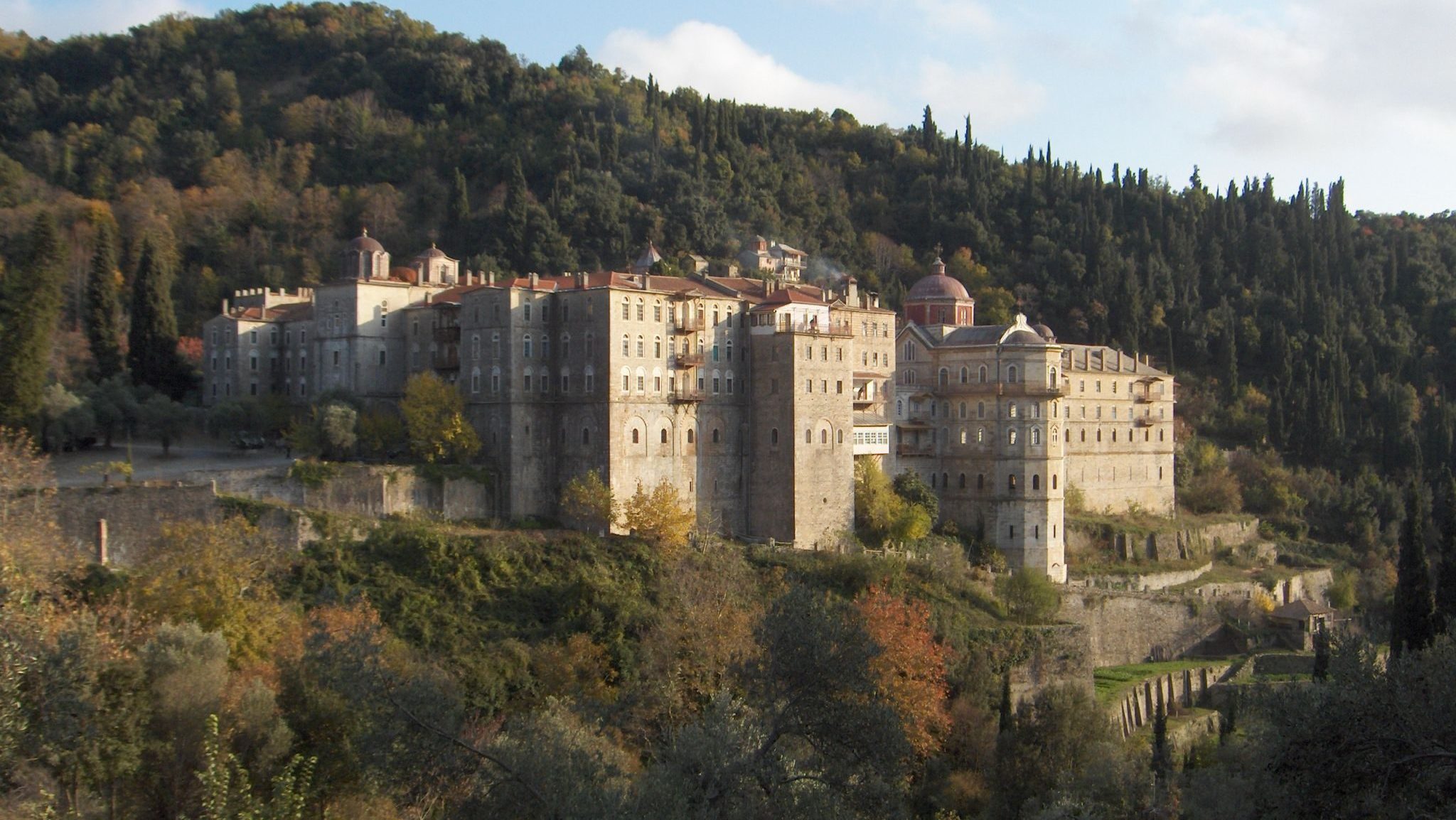
The Holy Monastery of Zografou ranks ninth in the hierarchy of Mount Athos monasteries. It’s built on a wooded slope on the northwestern side of the peninsula, away from the sea and surrounded by dense forest. It’s known as the “Bulgarian Monastery,” since it’s inhabited by Bulgarian monks and services are conducted in the Slavic language.
Where it is and what to expect from the landscape
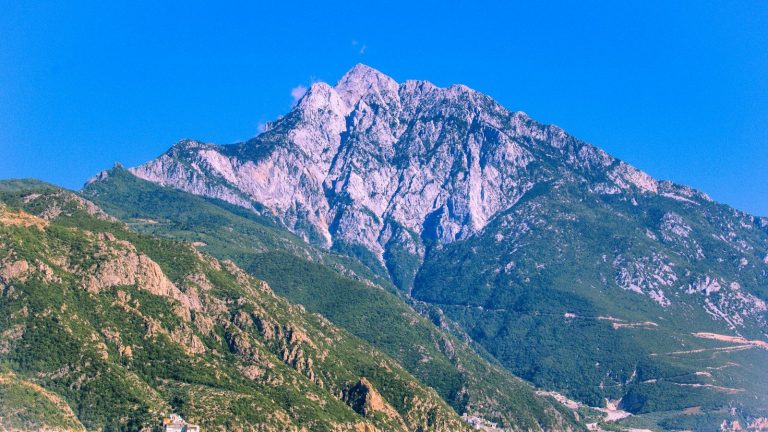
Geographically it’s in the Athos area, on the peninsula’s northwest side, on a slope that keeps moisture and greenery almost year-round. It’s not one of the monasteries that you spot from the sea. It requires approach, a bit of ascent, and then rewards you with that fortress-in-the-woods feeling.
In spring it smells of pine and wet earth. In summer, especially July and August, it can be warm, but inside the forest the heat is more bearable. Autumn is magical: fewer people and clean air, though you might encounter rain and slippery paths, so take care.
History and the miracle of its founding
According to tradition, the monastery was founded in the 10th century by three brothers from Ohrid: Moses, Aaron and John. When they couldn’t agree on which saint to choose as patron, they left a wooden panel in the catholicon and prayed. The next morning they found the icon of Saint George on the panel, painted in an “acheiropoietos” (not made by human hands) manner. From this miracle the monastery took the name “Zografou.”
This element — the acheiropoietos icon — is what gives particular weight to the pilgrimage. Many visitors tell me: “I didn’t come just to see a monastery. I came to stand before something carried through centuries.” And that’s how it feels.
Fortress-like architecture
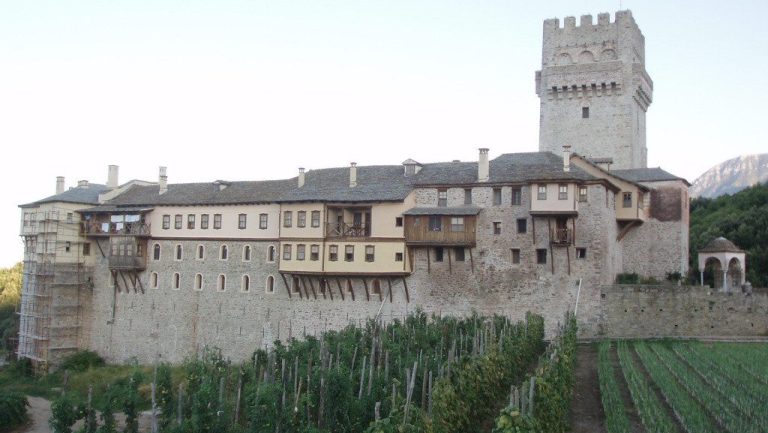
The monastery has a fortress form, with imposing walls that once protected it from raids. The current catholicon was built in 1801 and follows the Athonite type. The bell tower and the wings of the cells, which have been renovated with support from the Bulgarian state, are impressive.
If you’ve visited other monasteries on Athos, you’ll notice differences in the site’s “atmosphere.” Here you strongly feel the Slavic presence — not as a tourist feature, but as a daily, liturgical reality. Even the rhythm, the chants and the style have their own language.
Holy relics and the library
The acheiropoietos icon and other pilgrim items
The most important relic is the miraculous icon of Saint George the Zograf. The monastery also preserves the icon of the Virgin Mary the “Epakoúousa” and the Virgin Mary of the “Akathistos.”
It’s best to go with an attitude of respect and quiet. Don’t rush or push to “make time.” The spaces have their order and the monks, especially during services, have priority in their ministry. If you’re polite and discreet, they will usually guide you correctly.
Library with Slavic depth
The library is of particular importance for Slavic literature. It holds about 400 manuscripts and more than 10,000 printed books. It also preserves the “Chronicle of Paisius”, the first work of Bulgarian historiography written by the monk Paisius in 1762.
If you’re interested in manuscripts and history, keep in mind that this isn’t a museum with free roaming. Many things operate by rules and permission, and rightly so. Ask calmly, explain your interest, and allow space for them to tell you what’s possible on any given day, because these things change.
Feasts and the calendar
The Monastery of Zografou follows the Ιουλιανό Ημερολόγιο (Παλαιό), which affects the dates of festivals as we commonly know them.
- Αγίου Γεωργίου (Κύρια Πανήγυρις): 23 Απριλίου (6 Μαΐου με το Νέο Ημερολόγιο).
- Μνήμη των 26 Ζωγραφιτών Μαρτύρων: 10 Οκτωβρίου (23 Οκτωβρίου με το Νέο Ημερολόγιο), οι οποίοι μαρτύρησαν το 1276.
During feasts there is more movement and accommodation at the monasteries requires earlier arrangement. Ouranoupolis also fills up more easily then. Don’t leave things to the last minute, especially if you’re traveling from far and want to avoid stress.
Planning a visit from Ouranoupolis
Zografou is among the more remote monasteries. Access is either by boat from Ouranoupolis (landing at Zografou’s arkhi and a 45-minute walk or transfer with the monastery’s vehicle), or via paths from the monasteries of Konstamonitou or Docheiariou.
Practically, for most people Ouranoupolis is the base. That’s where you get the pilgrim permit from the Pilgrims’ Office and where the little boat departs. Schedules change by season and weather, so I always tell our guests to check official sources and not rely on old online information.
And something very down-to-earth: weather and wind matter. When it’s windy, especially with a northerly wind, the sea can get rough. If you get seasick, prepare in advance and leave a little buffer time in your schedule. Don’t make your day so tight that a small mishap ruins the whole mood — that would be a shame.
What to bring
No exaggeration is needed, but the basics make a difference. Closed shoes for the path, a light jacket even in summer because it cools down in the forest, and water. A small flashlight also helps if you move early or late around courtyards and corridors.
If you plan to walk from another monastery, ask about time and terrain. Distances on Athos are not like an “urban stroll.” There are climbs, rocks, and when it’s wet it’s slippery.
Staying in Ouranoupolis — calm before and after
For a visit to Zografou, staying in Ouranoupolis isn’t just convenient. It’s almost essential if you want to start without stress, be close to the harbor, and have someone tell you a couple of right things at the last minute.
At Athos Guest House – Pansion we’ve hosted pilgrims heading to the monasteries for years. We know when you need to wake up early, what to watch out for with paperwork, and how to arrange your return so you aren’t rushing. One night before your trip changes the whole experience.
Contact us for 2026 offers and family/group discounts.
You often ask, and I understand: “Will I make it in time? Will I find transport from the arkhi?” These things are usually arranged but need confirmation close to the date. We’ll inform you of what we know at the time and tell you where to check officially so you’re covered.
Who this visit suits best
Zografou suits people who want quiet, depth, and don’t mind walking a bit. If you love nature, you’ll enjoy it. If you love history, it will hold you. If you’re a family or older traveler, it’s doable but requires a gentler pace and fewer “ambitions” for a single day.
For couples, groups, or solo pilgrims, what works best is not to chase many monasteries at once. A good pilgrimage isn’t a checklist. It’s an experience, and it needs time to settle within you.
Small practical tips from our daily life
Be in Ouranoupolis the night before, especially if you’re coming from Thessaloniki or farther. The drive is usually around 2 hours from Thessaloniki, but with traffic, stops, and fatigue, it’s not nice to arrive at the last minute.
Check official weather data before you leave. Wind and clouds over the Strymonian Gulf and Mount Athos aren’t always the same as in town. A quick check saves you surprises.
If you want reliable sources to read and verify things, see the official Mount Athos site here: https://www.agioritikiestia.gr/. For a basic overview and the monastery’s historical context, there’s also Wikipedia: https://el.wikipedia.org/wiki/%CE%99%CE%B5%CF%81%CE%AC_%CE%9C%CE%BF%CE%BD%CE%AE_%CE%96%CF%89%CE%B3%CF%81%CE%AC%CF%86%CE%BF%CF%85. And for weather, a steady choice is the Hellenic National Meteorological Service: https://www.emy.gr/.
Useful phone numbers
Keep the following handy on your phone. Things on Athos get easier when you can confirm something directly, especially if the weather changes or you need to notify about an arrival.
Ιερά Μονή Ζωγράφου (Γραμματεία): +30 23770 23247
Γραφείο Προσκυνητών (Ουρανούπολη): +30 23770 71421
Athos Guest House – Pansion: +30 23770 71337, +306957638384
Contact us
to see the availability or offers for your stay.
send us an email to info@pansionathos.gr
call us: +306957638384 or +302377071337
call us or send a message via WhatsApp
send an SMS text message
call us or text us on Viber
Don’t forget to mention:
- Number of Persons, Possible Dates, Requirements
Suggested 4-day itinerary
If you want to do it without pressure, this plan works well for many of our guests. It leaves time for prayer, rest and travel without panic.
- Day 1: Arrival in Ouranoupolis and overnight at Athos Guest House – Pansion. Settle in and prepare documents.
- Day 2: Boat to Zografou’s arkhi and ascent to the Monastery. Overnight and introduction to the Slavic tradition.
- Day 3: Hike through the forest toward Konstamonitou or Docheiariou Monastery, depending on your schedule and abilities.
- Day 4: Return to Ouranoupolis and one last overnight to catch your breath before the road.
If you like, tell us the days you’re thinking of traveling and your style — quieter or more active. We’ll tell you what usually works well and what’s better not to squeeze into one day.
Contact us for 2026 offers and family/group discounts.