
Mylopotamos Skete — Mount Athos
Mylopotamos is one of those Mount Athos places you remember with all your senses. Stone on the sea, a vineyard clinging to the rock, and a quiet you won’t find outside the Athonite polity.
As a hotelier in Ouranoupolis, I’ve seen many pilgrims arrive full of questions and return changed. If you’re planning a visit, here are practical, no-nonsense tips to help you do it right and calmly.
Mylopotamos within Mount Athos
Mylopotamos is a seaside kathisma belonging to the Monastery of Megisti Lavra. It sits on the eastern side of the Athos peninsula, between Iviron Monastery and Karakallou Monastery. Its location is special because it combines the strict Athonite landscape with the sea right below — a combination you don’t find everywhere.
If you’d like a quick official framework about how the area operates and what generally applies, take a look at the official Mount Athos website. Visit rules and procedures change from time to time, so it’s wise to check the latest updates.
A bit of local history
Tradition links Mylopotamos with Saint Athanasios the Athonite, the founder of Megisti Lavra. It’s said the place functioned early on as a “garden” and supplier, with waters that drove mills and land that provided produce for the brotherhood — hence the name.
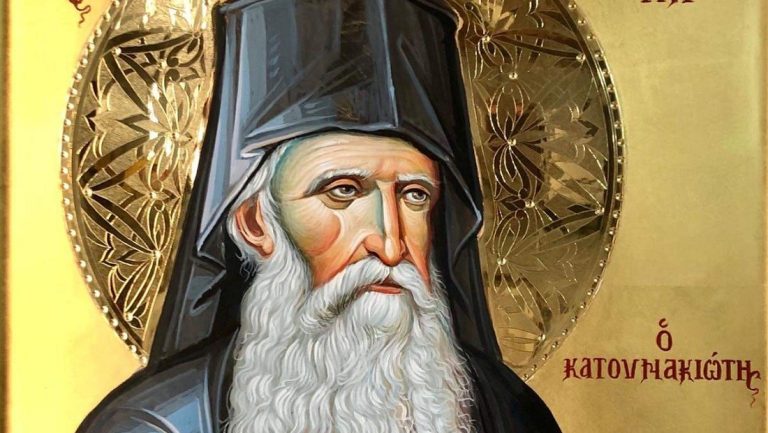
Over the years, like many coastal spots on Athos, it went through hardships: pirate raids, decay, abandonment. Its more recent revival is closely associated with Elder Epiphanius of Mylopotamos, known outside Mount Athos for Athonite cooking and his persistence in restoring the place. You might not care for every detail, but you’ll sense it when you’re there. That “rebuilt with effort” quality is visible.
Architecture and sense of place
Mylopotamos isn’t a single building. It’s a compound. Your eye first goes to the defensive tower, built as if to guard the approach from the sea. Then you notice the stone buildings tied into the slope, and you sense this was a place meant to protect people and goods.
The katholikon, the main church, gathers the silence. It’s dedicated to Saint Eustathius and also connected to the memory of Saint Athanasios. You don’t need to be an art expert to feel the Byzantine seriousness and the simplicity that keeps you humble. Don’t rush. Sit at the edge for a while — you’ll see.
And then there’s the part many don’t expect: the winery and the vineyards. Here Athos shows its practical side. Tradition, work, care. If you love wine, you’ll appreciate it. If not, you’ll still understand what it means to keep a craft alive in such a setting — and that matters.
What to keep in mind as a pilgrim
Mylopotamos, beyond its beauty, remains a place of worship. Keep your visit simple and modest. Ask before you take photos. In many areas photography is not allowed — and that’s not just a rule, it’s about respect and the rhythm of life here.
If you happen to visit on a feast day or close to a major celebration, the experience changes. There’s more activity, more preparation, and often less time to explore. On Athos, the schedule follows the services, not the visitor. If you accept that from the start, things go more smoothly.
Old and new calendar — what it means in practice
Mount Athos follows the Old Calendar (Julian). This confuses many, especially when trying to match feasts and travel plans. For example, the feast of Saint Eustathius is September 20 on the Old Calendar, which corresponds to October 3 on the civil calendar. The same goes for Saint Athanasios (July 5 Old, July 18 New) and Saint Tryphon (February 1 Old, February 14 New). It’s good to note this so you don’t book the wrong dates and end up rushing.
How to get there from Ouranoupolis, without stress
The starting point for most is Ouranoupolis, the “Gateway to Athos.” From here you take the boat to Dafni. From Dafni you usually continue towards Karyes and then toward the area of Iviron Monastery, depending on where you’ll stay and what you’ve arranged. Don’t try to do it all in one go. On Athos travel takes time, and sometimes patience.
From Iviron Monastery, Mylopotamos can be reached on foot via a route that takes most people about 30 to 40 minutes, depending on pace and heat. The path is beautiful and coastal in parts, but it’s not a beach stroll. Wear proper shoes and bring water.
If you want a more general, neutral description of the area and its status, Mount Athos on Wikipedia gives a good overview. It doesn’t replace official updates, but it helps you get in the mood.
When to go, and what each season feels like
Spring and early summer are, for many, the best times. The light is clear, nature is full, and walking is comfortable. In summer, especially July and August, the heat on the trail can tire you quickly and there are more visitors. Many come for pilgrimage, and monastic hosting has limits.
Autumn has a mild sweetness, less heat, and often a calmer pace. In winter conditions are more demanding. The sea and winds around Athos are not to be underestimated, and travel can be affected. For weather and winds, it’s worth checking the official Hellenic National Meteorological Service at emy.gr before you set off. Sometimes a small change in weather causes delays, and it’s a shame for plans to be spoiled.
Who Mylopotamos suits best
Mylopotamos suits pilgrims who want to see something beyond the “main” sites and feel Athos’s coastal face. It’s also for people who appreciate the history of monastic production — vineyards, cellars — and how prayer ties to daily work.
If you travel with older people or someone who has difficulty walking, simply plan so they aren’t pressured. The time on the trail and the ups and downs require moderation. It’s not a race, and there’s nothing to prove.
Accommodation and realistic expectations
As a kathisma, Mylopotamos has limited hosting capacity. In practice, most visitors stay at nearby monasteries, often Iviron or Karakallou, and visit Mylopotamos as a day trip. That’s also the safest plan, because you’re not relying on something that might not be available at the last minute.
If you want to organize your entry more comfortably, the best approach is to arrive in Ouranoupolis the night before. Sleep well, get your diamonitirio without rushing, and leave in the morning with a clear head. Here at Athos Guest House – Pansion we see that this works every time. When someone starts out tired, everything feels twice as difficult.
Contact us for 2026 offers and family/group discounts.
Small practical tips that save the day
On Athos, “less and right” is a rule. Don’t carry useless things, but don’t go unprepared either. One bottle of water, a simple snack for energy, and a lightweight layer — even in summer, because the sea breeze can change suddenly. And of course a small flashlight, since your movements may start early or end late depending on the schedule.
- Shoes: closed, with a good sole. The trail has rock and soil, and if you slip you’ll remember it.
- Respect: keep your voice low, move simply, and ask before doing anything that “looks innocent.”
- Time: allow margin. Delays are part of the journey; don’t take them personally.
- Communication: if you can, inform ahead of your visit. The fathers have duties and services; this is not a visiting place like those outside.
If you want a calmer experience, do it this way
The nicest scenario I often see is: one night in Ouranoupolis, entry to Mount Athos with an unpressured schedule, overnight in a monastery in the area, and a visit to Mylopotamos without chasing the clock. If you try to squeeze everything, you’ll leave with photos but without the feeling.
One more thing. When you return from the exit, give yourself some time before getting into the car for Thessaloniki or driving on to other parts of Halkidiki. One night in Ouranoupolis after the pilgrimage helps a lot. A warm bath, a quiet evening, and in the morning you’re human again. I say it because I’ve seen it countless times.
Contact us
to see the availability or offers for your stay.
send us an email to info@pansionathos.gr
call us: +306957638384 or +302377071337
call us or send a message via WhatsApp
send an SMS text message
call us or text us on Viber
Don’t forget to mention:
- Number of Persons, Possible Dates, Requirements
Useful phone numbers to have noted
So you don’t search at the last minute, keep a few basic contacts. Always confirm, because things on Mount Athos can change without notice.
- Holy Kathisma of Mylopotamos: +30 23770 23771
- Pilgrim Office of Ouranoupolis: +30 23770 71421
- KTEL of Mount Athos (Karyes buses): +30 23770 23266
- Athos Guest House – Pansion: +30 23770 71337, +30 6957638384
A realistic 4–5 day idea
If you have time and want to do it at a humane pace, a route that fits many is to start at Karyes, then Koutloumousiou Monastery, then Iviron Monastery, make Mylopotamos a separate day or half day, and then continue to Karakallou Monastery. From there, depending on stamina and schedule, you can go to Philotheou Monastery or Megisti Lavra. It’s not a “mandatory” plan, just a flow that works well and doesn’t wear you out.
For more official information about the wider area of the Aristotle Municipality, which includes Ouranoupolis as a main gateway, you can also see the Aristotle Municipality. Useful for announcements, access, and general news that affect the area.
If you want, before you set out, stop by our place in Ouranoupolis and we’ll talk for a couple of minutes. We’ll tell you what we’re seeing these days with the weather, traffic, and practical matters so you can leave without hurry and without unnecessary worry.
Contact us for 2026 offers and family/group discounts.