Lakkoskiti (Skete of Saint Demetrios)
If you’ve been to Mount Athos before, you know there are places you don’t “happen upon” by chance. Lakkoskiti is one of them. It’s deep in a ravine, quiet, green, and it instantly puts you into a different rhythm.
Here in Ouranoupolis we see pilgrims setting out for the Garden of the Virgin every day. And when someone tells me “I want Lakkoskiti,” I understand they’re looking for something more secluded, more authentic, with walking and preparation.
Lakkoskiti (Skete of Saint Demetrios): what to expect in practice
Where it is and why it’s called “Lakkos”
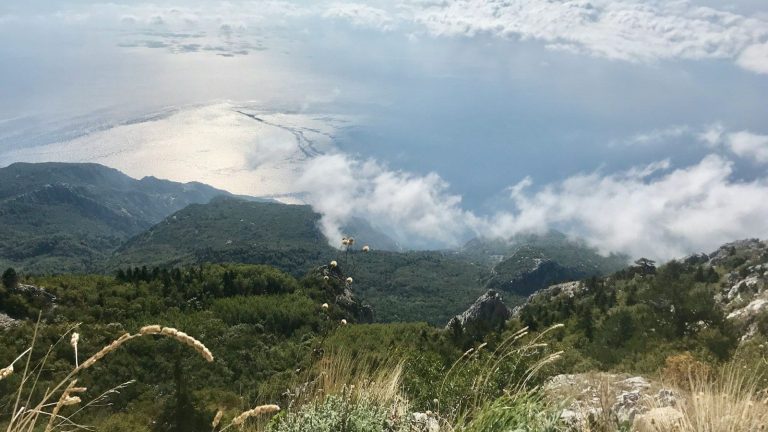
Lakkoskiti, also known as the Skete of Saint Demetrios, is hidden in a wooded ravine between Karakalou Monastery and the Great Lavra on the eastern side of Athos. The word “Lakkos” isn’t poetic. It’s literal. You descend into a valley with chestnut and plane trees, and you feel the place sheltering you from wind and noise.
Administratively it’s an atypical skete and depends on the Holy Monastery of Saint Paul. That matters if you need to ask about hospitality or practical matters, because rules and arrangements on the Mountain require the right channel.
A little history, as we hear it from the monks
The area has been inhabited since at least the 10th century, with Slavic presences and later a strong Romanian monastic influence. Lakkoskiti’s heyday came mainly in the 18th and 19th centuries, when many huts were built and a lively spiritual life was organized.
After World War I and political changes in Romania, much changed and the skete was nearly abandoned. In recent years, however, there’s been a revival. Young monks, largely of Romanian origin, are restoring huts, bringing chapels back to life, and keeping the prayer routine in a way that moves you, even if you’re not an “experienced” pilgrim.
Architecture and atmosphere: simplicity that calms
The kyriakon, the skete’s main church, is dedicated to Saint Demetrios. It was rebuilt in the late 19th century and has that Athonite style with subtle Romanian details. Inside it’s dark and contemplative, not “touristy.” If you catch a vigil, you’ll understand why many speak of an experience that stays with them for years.
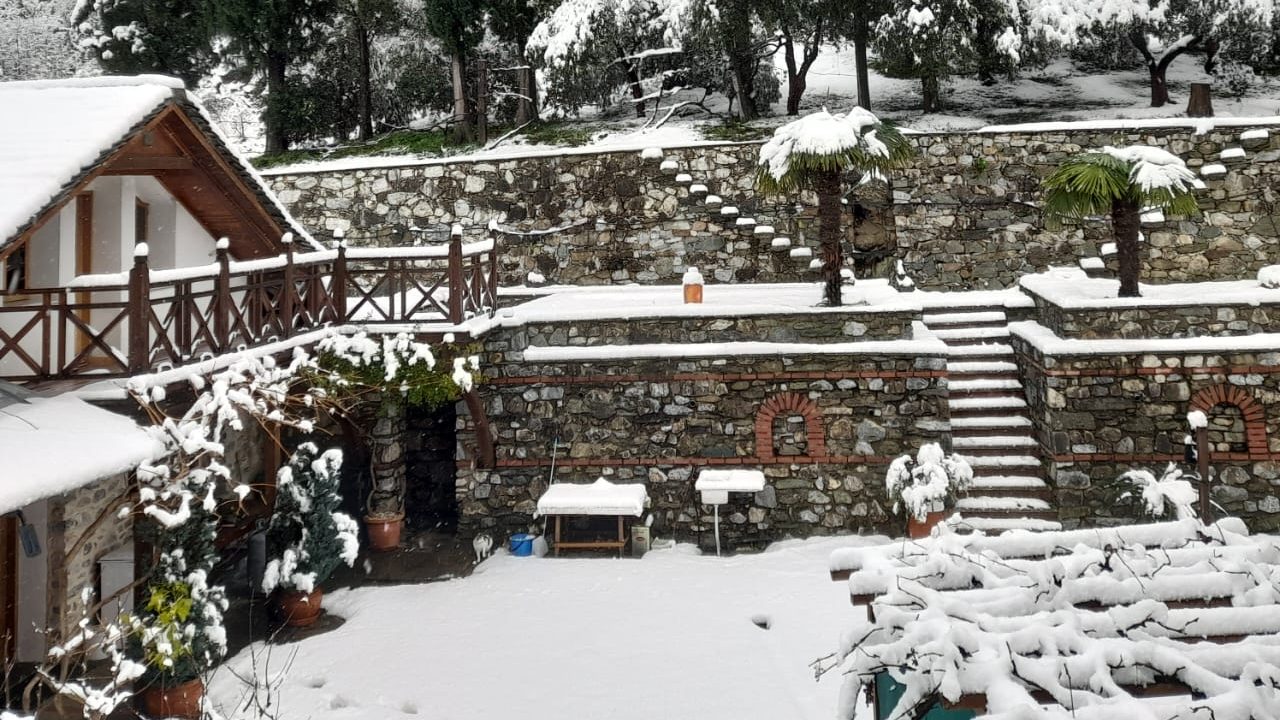
The huts are scattered through the ravine. There’s no strict layout. Stone, wood, small chapels, workshops, gardens. And around them, green. In spring and early summer the water and shade make the route gentler. In August the walk is more demanding, especially with a backpack.
Relics and spiritual treasures
Despite its isolation, Lakkoskiti holds items of great importance for Orthodoxy. In the kyriakon is the icon of Saint Demetrios, especially venerated by the fathers and pilgrims. There are also holy relics shown mainly on major feast days, along with old sacred vessels and liturgical objects.
If you’re interested in history, there’s a small but significant library with manuscripts and codices in Romanian and Church Slavonic, plus an archive that shows the skete’s relationship with the Monastery of Saint Paul and donations from earlier times. It’s not a “museum” with opening hours. It’s a living place, approached with respect and discretion.
Calendar and the Feast of Saint Demetrios
As across Mount Athos, the Old Calendar is followed. For visitors this means dates “shift” compared with the civil calendar. The main feast of Saint Demetrios is October 26 on the Old Calendar, which usually corresponds to November 8 on the New Calendar. It’s wise to check before you fix dates, because each year there are small practical details to consider.
For basic information and a general picture of the Mountain’s regime and rules, it’s helpful to check the official Mount Athos portal: https://www.agioritikiestia.gr/. And for historical context, without getting lost in “guides,” Wikipedia offers a good introduction: https://en.wikipedia.org/wiki/Mount_Athos.
How to get there: from Ouranoupolis to the trail
The usual starting point is Ouranoupolis, in Halkidiki, opposite the Athonite peninsula. From here you take the boat to Dafni and then continue toward Karyes. From Karyes, depending on where you’re headed, you move on to a specific monastery—often Karakalou or Philotheou—so you can pick up the correct trail.
From Karakalou Monastery there’s a path through the forest that leads down to Lakkoskiti. Count on roughly 1.5 to 2 hours of walking, depending on pace and pack weight. It’s not an alpine climb, but there are slopes, rocks, and roots, and in places you need to be careful if it’s rained. After heavy rain the ravine stays damp and can be slippery. That’s when people slip up because they think “it’s summer, so it must be easy.” It’s not always.
For schedules and changes to the sea connections, it’s best to check official announcements. A useful source for general updates is the Municipality of Aristotelis: https://www.dimosaristoteli.gr/. And because Aegean weather changes quickly, especially with northerly winds, take a look at the Hellenic National Meteorological Service before you set out: https://www.emy.gr/.
What to do there and how to conduct yourself
Lakkoskiti is not a place to “cram in a lot.” It’s a place to quiet down. If you stay, hospitality is limited and requires prior contact. If you visit for pilgrimage, move with respect, keep a low profile, and don’t rush. The fathers work, pray, and the spaces are, first and foremost, places of life.
If you need practical things, know that you won’t find “city conveniences.” Bring water, a light snack for energy, and don’t rely on mobile signal. The good thing is that the nature down there keeps things cool and, when there’s no wind, you’ll hear only birds and water. That’s the magic of it.
When it’s best: seasons, heat, wind, crowds
Spring and early summer are, for me, the most beautiful times. Green, clear air, and walking becomes more pleasant. In mid-summer it’s hotter and the number of visitors on the Mountain generally increases. Autumn has its charm, but if the weather turns to rain the trail needs extra care.
The northerly winds in the Aegean can affect the boats and transfers. It’s not rare. That’s why I always tell our guests to keep a little flexibility in their plans and not to tie their days too tightly. A delay on the Mountain is part of the experience, however annoying it may be at the time.
Who it’s really for
It’s right for people who love quiet, hiking, and simplicity. For pilgrims ready to walk and let their schedule be a bit looser. For older visitors it’s possible, but only if they’re in good physical shape and keep a steady pace. For groups wanting “many sights in two days,” it’s not the right goal. Here you go to linger, not to rush.
Practical preparation from Ouranoupolis: what makes the difference
If you’re starting from Ouranoupolis, proper preparation saves energy. Especially for Lakkoskiti, where walking is involved, it’s good to have hiking shoes, spare socks, a lightweight rain jacket, and to avoid carrying useless items. Many bring a suitcase “just in case” and then regret it on the trail.
At Athos Guest House – Pansion, we are literally next to the daily departure routine. You can organize your paperwork calmly, sleep well, and leave in the morning without stress. And yes, we hold luggage so you can walk lighter. That small thing makes a big difference, especially in heat or humidity.
Quick tips I always give before you leave
- Start early. Not to “catch up,” but to walk in coolness and with a clear head.
- Don’t underestimate water. The ravine is cool, but the walk tires you.
- If it has rained, go down more slowly. The rock gets slippery and doesn’t forgive.
- Keep a quiet tone and a slow pace. There that’s the rule, not the exception.
- Contact in advance if you want to stay overnight. Places are few and not done “anyhow.”
If you like, before you leave stop by and we’ll tell you what we’ve been hearing lately about trails, weather, and general conditions. It’s not official information, but the local experience, word of mouth, usually helps. Sometimes a short chat saves a lot of trouble.
Contact us
to see the availability or offers for your stay.
send us an email to info@pansionathos.gr
call us: +306957638384 or +302377071337
call us or send a message via WhatsApp
send an SMS text message
call us or text us on Viber
Don’t forget to mention:
- Number of Persons, Possible Dates, Requirements
Useful phone numbers for planning
It’s good to have a few basics noted down, because on the Mountain arrangements are made simply and directly. Information can change, so always confirm before you set out.
- Lakkoskiti (Kyriakon Archontariki): +30 23770 23252
- Holy Monastery of Saint Paul (Ruling Monastery): +30 23770 23250
- Pilgrims’ Office of Ouranoupolis: +30 23770 71421
- Agioritic Lines (boats): +30 23770 71149
- Athos Guest House – Pansion: +3023770 71337, +30 6957638384
Suggested 4–5 day plan, if you want to arrange it smoothly
If Lakkoskiti is your main goal, it fits nicely into a pilgrimage that moves along the eastern side. A classic flow is to pass through Karyes, stop at nearby monasteries, and then descend into the ravine for the skete. After that, many continue to the Megisti Lavra if they have the strength and time. That, of course, needs proper planning, because distances on the Mountain aren’t always what the map suggests.
If you want to organize it without pressure and with a little safety in transfers, tell us your dates and how fit you are. We’ll tell you what’s realistic and what will feel rushed, so the mood doesn’t get spoiled.
Contact us for 2026 offers and family/group discounts.
Note: Due to its location, the Skete can be hard to access during periods of heavy rain. Ask us about current conditions before you depart.