Stavronikita Monastery
If you have walked even a little on Mount Athos, you will have felt that each monastery has its own character. Stavronikita is one of those that wins you over at first sight. Small, tightly built on the rock, quiet, with a kind of stately air that doesn’t make a fuss.
As someone who has hosted pilgrims for years in Ouranoupoli, I often recommend it to those who want to see the eastern coast of Athos without too much back-and-forth. It sits in a spot that immediately puts you in the mood, especially if you love the sea and the feeling of a fortress above the waves.
Elegance and quiet on the eastern coast
The Holy Monastery of Stavronikita is the 15th in order of the 20 monasteries of Mount Athos. It is located on the eastern side of the peninsula, between Pantokratoros Monastery and Iviron Monastery. The landscape here is more “maritime,” with light falling early on the rocks and the water often looking crystalline, especially on days without wind.
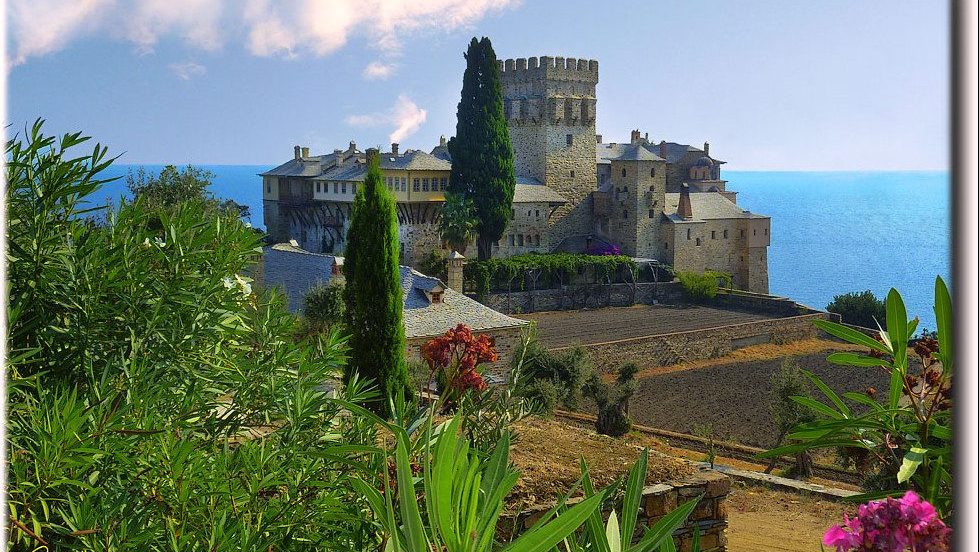
Its strongest feature is its location. Built on a steep rock, it resembles a seaside fortress. Indeed, when you see it from the path or from the sea, you feel it stands firmly on its stone “step” and looks out over the Aegean without hurry.
It is the smallest monastery on Athos, yet imposing. It doesn’t need to spread out to impress. Everything is more compact, closer, more human. For many pilgrims that is a relief, especially if it’s their first time.
History and tradition
Stavronikita’s history goes back, with references already from the 10th century. Its present form is mainly associated with Patriarch Jeremiah I, who in 1533 began rebuilding on the ruins of earlier structures. At that time many things on the Holy Mountain were changing, and the restoration of a small monastery in such a difficult location shows determination and faith.
About its name you’ll hear more than one version. Some say it comes from the two first founders, Stavros and Nikitas. Others link it to a monk named “Stavronikitas.” On Mount Athos, these traditions live together. You don’t need to pick one; it’s enough to understand that memory here functions like prayer.
Architecture and frescoes
Because the rock leaves little room, the monastery developed vertically. That gives it a distinctive look, almost as if it “rises” toward the sky. The tower at the entrance is one of the first things you’ll notice. It stands strict, protective, and fits perfectly with the idea of a castle.
The Katholikon is dedicated to Saint Nicholas and is considered the smallest on Mount Athos. Don’t underestimate it. Inside you will see frescoes by Theophanes (1546), one of the leading painters of the Cretan School. These are works that make you linger a little longer, not just for the art but for the calm they exude. If you’re a fan of iconography, you will appreciate it a lot, even if you’re tired from walking.
Holy relics and the “Streidas”
The monastery’s best-known relic is the mosaic icon of Saint Nicholas, the so-called “Saint Nicholas the Streidas.” Tradition says fishermen found it in their nets. An oyster was attached to the saint’s brow, and when it was removed it caused bleeding at the spot. The shell is still preserved in the monastery. It’s a story that makes you draw inward a little, because on the Mountain icons are not just objects. They are presence.
If you’re interested in books and manuscripts, it’s worth knowing the library holds 171 manuscripts. Among them is “Codex 46,” a 12th-century Psalter. These items aren’t always available for everyone to see up close, but knowing they exist makes you feel the place carries the weight of centuries.
Feasts and calendar
The monastery follows the Julian (Old) Calendar. Practically, this means dates you know “outside” may fall differently on the Mountain. If you want to be at a feast, organize early and confirm with official sources, because circumstances change and guest places are limited.
- Saint Nicholas: 6 December (19 December with the New Calendar) as the main celebration.
- The Dormition of the Theotokos (Life-giving Spring): on Bright Friday (the Friday of Bright Week).
Exactly where it is and what to expect in the landscape
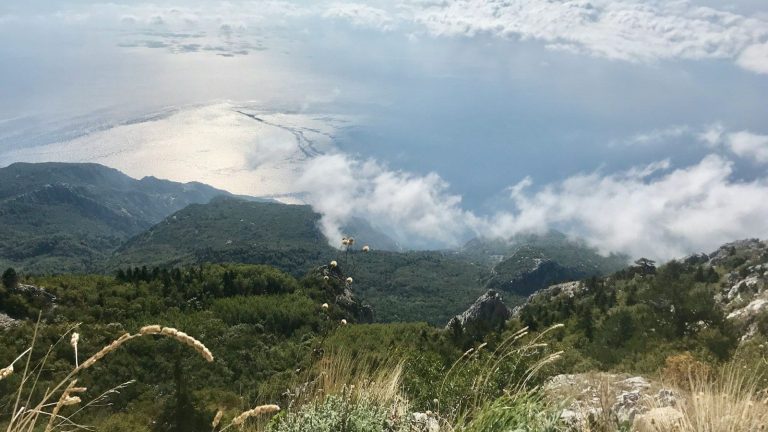
Stavronikita faces east, toward the open Aegean Sea. That gives a different light, a different wind, and the sense of being right above the waves. On northerly wind days, the sea can stir and you’ll hear the water striking below the walls. On calm days, especially in spring and early autumn, the water is clear and the scene looks like a painting.
If you come in summer, know that walking in the heat can be intense. Inside the monastery walls, though, due to the stone and shade, the temperature drops noticeably. It’s one of those places that cool you down without you noticing. Bring some water and a hat; they will save you.
How to get there
Access to Mount Athos is arranged with the diamonitirion and by boat from Ouranoupoli to the port of Dafni. From there you usually continue to Karyes and then on foot to the monasteries. I won’t go into schedules and details because they change, and it’s best to check them close to your travel date.
For Stavronikita many start from Karyes. The monastery is about a 1 to 1.5 hour hike, depending on pace and weather. The path is a classic Athonite trail, with spots requiring attention, but generally passable for someone who walks normally. If it has rained, you’ll find slippery sections, so shoes with a good sole are a must. Don’t neglect that; I’ve seen it ruin the mood.
For official information worth checking, see the Center for the Preservation of Athonite Heritage (KEDAK) here: https://www.kedak.gr/. The general framework for Mount Athos on Wikipedia is also useful: https://el.wikipedia.org/wiki/%CE%86%CE%B3%CE%B9%CE%BF_%CE%8C%CF%81%CE%BF%CF%82. For weather and winds before you set out, check an official source like EMY: https://www.emy.gr/.
What to do around the monastery
The main thing here is to get into its rhythm. Sit a while in the courtyard, observe the stone, listen to the sea. If you have time and energy, it pairs nicely with a route to Iviron Monastery or Pantokratoros Monastery, depending on where you’re coming from and your schedule. Distances on the eastern coast seem short, but on foot with ups and downs they grow. Keep a realistic plan so you’re not rushing.
For photography lovers, Stavronikita makes very nice images from a distance, with the castle-monastery on the rock. Inside, though, respect is required. Always follow instructions and don’t force situations. Each monastery has its rules and that’s right.
Best time to visit
Spring and autumn are my favorites. The air is clearer, temperatures milder, and walking is comfortable. Summer has more traffic, especially when many Greeks travel. In winter the landscape is severe and very beautiful, but conditions are harder. It requires experience, proper clothing and good planning.
On the eastern side the wind can change quickly. A calm day can give way to a strong northerly. If you’re sensitive to cold, bring an extra layer, even a light jacket. You may need it on the boat too.
Who it suits
Stavronikita suits pilgrims who want quiet and a more compact experience. It also suits those who love art and want to see Theophanes’ work up close. For older visitors it’s a good choice if the schedule is measured and doesn’t force many kilometers in one day. For groups wanting to hike between monasteries, it makes a nice midpoint, provided they plan time realistically.
For families, to be clear, Mount Athos has its restrictions. As an accommodation and preparation base, Ouranoupoli is family-friendly, but pilgrimage on the Mountain concerns male pilgrims according to the regulations. If you travel with companions, organize so everyone has a good time without misunderstandings or unnecessary strain.
Planning a visit and accommodation
The most practical move is to arrive the day before in Ouranoupoli. That way you’ll sleep well, depart early without stress, and have time for formalities. At Athos Guest House – Pansion we host pilgrims for precisely that reason. To start rested and clear-headed.
We help with local information, how to get to the port, and generally with the small things that in practice are big. We can also hold your extra luggage so you take only the essentials. Many appreciate this because every kilo counts on the walk, especially if it’s hot and humid. Sometimes people carry more than they need and regret it later, understandably.
Contact us for 2026 offers and family/group discounts.
If you want to organize your trip properly, schedule time to check the official instructions for the diamonitirion and entry. The procedures are specific and shouldn’t be left to the last minute. Anything that changes is best learned from an official source or a quick phone call.
Useful phone numbers
Keep these numbers handy somewhere. On the Mountain the signal isn’t always good, so it’s better to have them written down offline.
Stavronikita Monastery (Reservations): +30 23770 23255
Pilgrims’ Office (Ouranoupoli): +30 23770 71421
Athos Guest House – Pansion: +30 23770 71337, +306957638384
Contact us
to see the availability or offers for your stay.
send us an email to info@pansionathos.gr
call us: +306957638384 or +302377071337
call us or send a message via WhatsApp
send an SMS text message
call us or text us on Viber
Don’t forget to mention:
- Number of Persons, Possible Dates, Requirements
Suggested 4-day route
If you want a route that works nicely without breaking you, this is a classic choice. It adapts according to weather, fatigue, and the overnight stays you find. Always confirm in time, because monasteries have specific guest capacities.
- Day 1: Arrival in Ouranoupoli and stay at Athos Guest House – Pansion.
- Day 2: Entry to the Mountain, transfer to Karyes and hike to Stavronikita Monastery. Overnight stay.
- Day 3: Hike to Iviron Monastery and Philotheou Monastery.
- Day 4: Return to Ouranoupoli, relax and stay at Athos Guest House – Pansion.
Small practical tips from us here in Ouranoupoli
Take a light backpack, water, a small energy snack, and a spare pair of socks. It may sound excessive, but on a walk it makes a difference. If it’s hot, start early. If it’s humid, you’ll sweat more easily. And if it’s windy on the eastern coast, you’ll feel it more on exposed stretches.
One more thing. Don’t try to cram many monasteries into a few hours. The Mountain isn’t a checklist attraction. It needs time, and Stavronikita especially invites you to pause, look, and be still. If you do that, you’ll leave different — fuller, even if you don’t tell anyone.
Contact us for 2026 offers and family/group discounts.